Houston Precision Construction
Patio Contractor in Houston
Houston Precision Construction helps Greater Houston homeowners plan and build custom patios for outdoor dinners, seating and everyday time outside. Choose concrete, pavers or travertine for new patio work, or a custom stone overlay when your existing concrete is suitable.
Book a Design ConsultationCompleted HPC patio projects
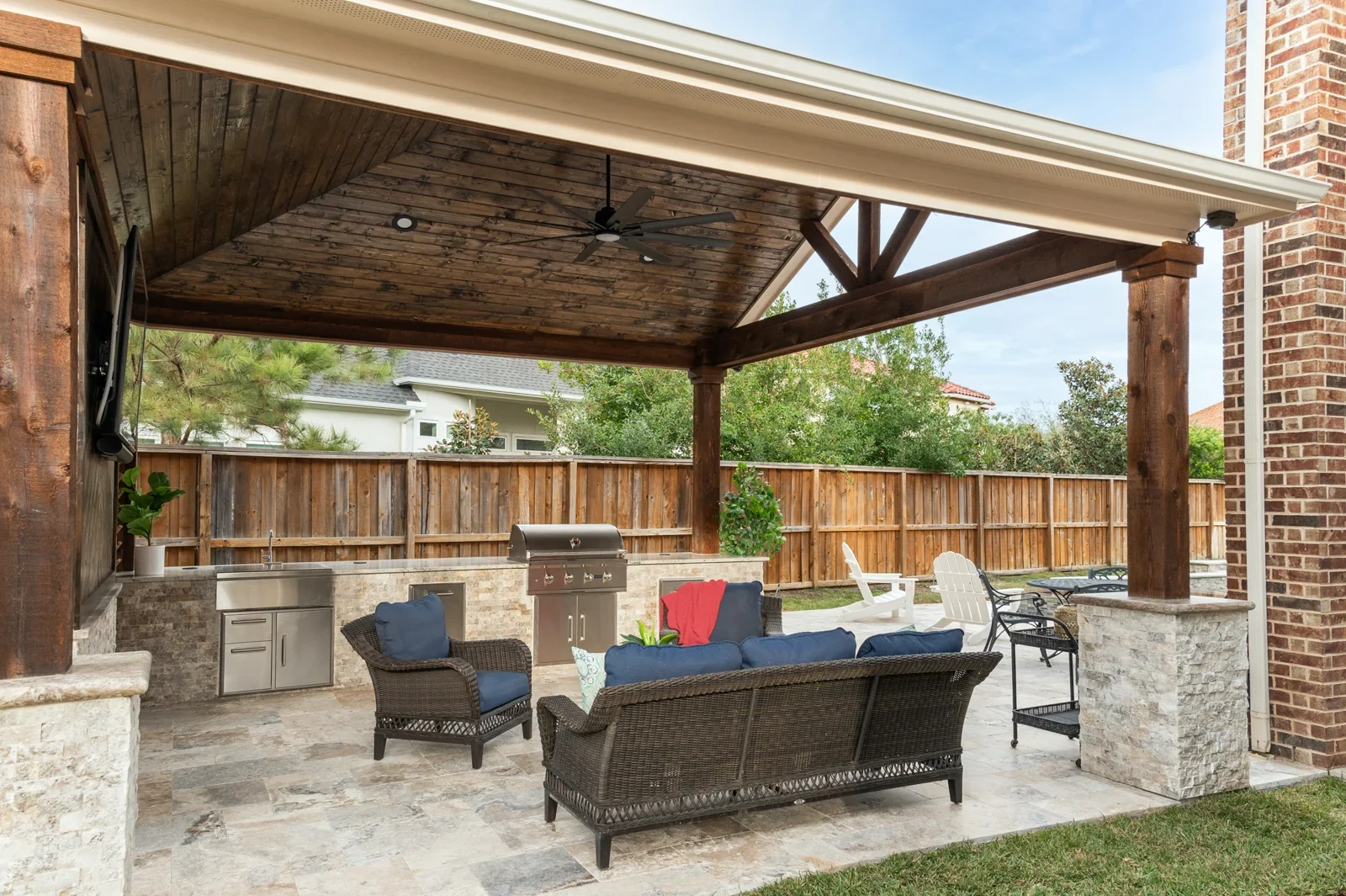
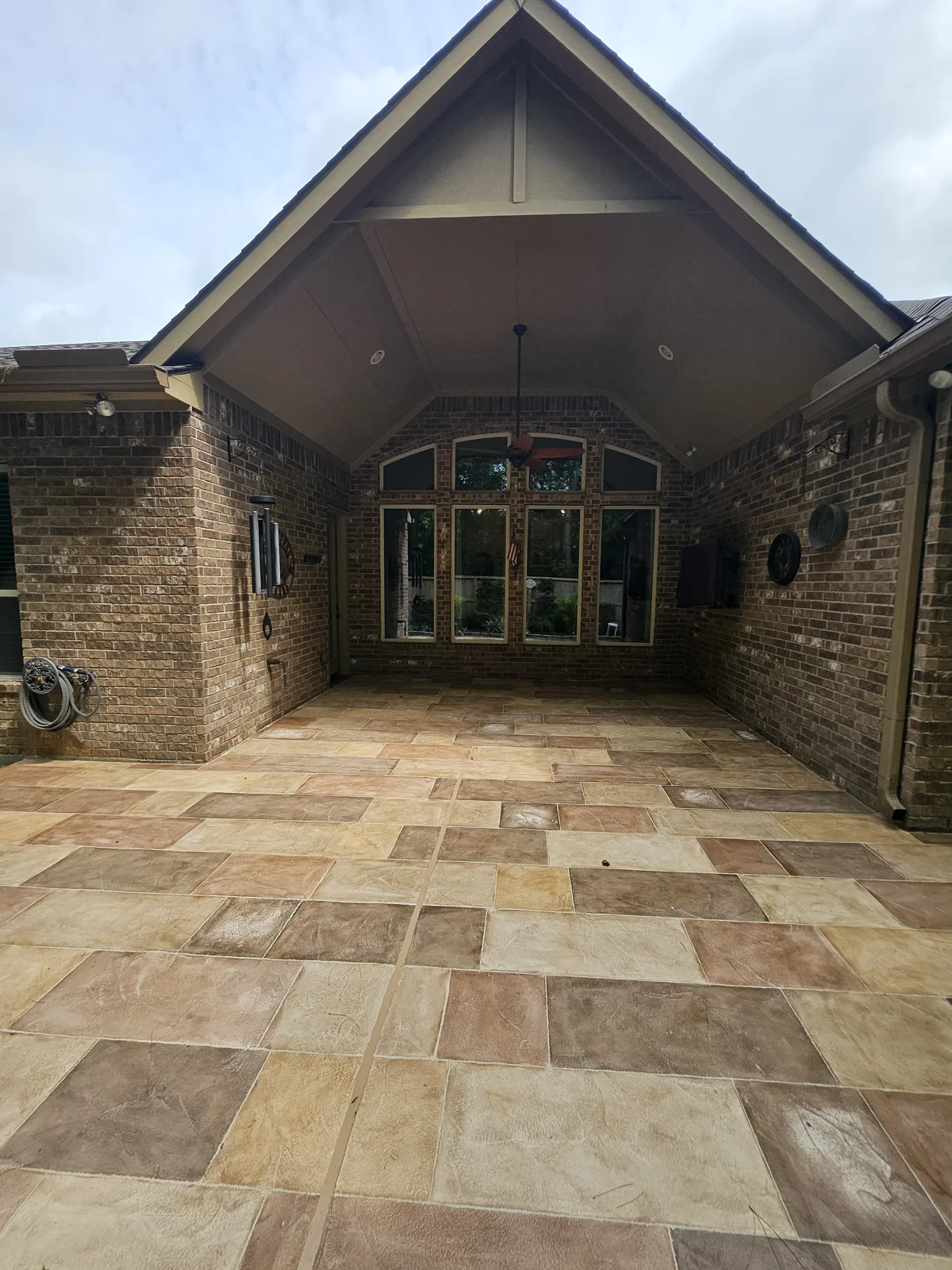
The Katy project combines natural travertine with a covered kitchen and pavilion. The Montgomery project shows a decorative overlay over an existing patio. For another surface and layout, see the completed paver patio with a defined pattern and border in Conroe. These are examples of completed work, not fixed-price packages.
Concrete, pavers or travertine: choosing your patio surface
Start with how the backyard will work: a dining table near the kitchen, seats for conversation, and clear paths to the lawn or pool. The patio surface should support that layout and fit your preferred upkeep. These choices have different benefits and tradeoffs.
Concrete: a continuous surface
Poured concrete can create a straightforward patio or extension without a pattern of individual paving units. Joints and curing are part of the work, and concrete can develop cracks as it shrinks or moves. An extension also needs careful consideration of the existing slab, elevations and water flow; new and existing surfaces may not look identical.
Pavers: patterns, borders and individual units
Concrete pavers offer choices of shape, texture and pattern. A border can define the seating area, and individual units can often be lifted for access or replacement. The tradeoff is that joints and edges need attention, and a finished pattern cannot compensate for poor ground preparation. Detailed cuts, curves and steps add installation work. Our Houston paver and travertine installation page covers paving systems, patterns, walkways and pool decks in more detail.
Travertine: natural variation
Travertine brings natural-stone color and texture variation to a patio or poolside space. Compare samples and the selected finish with the house and surrounding masonry. Natural stone requires product-appropriate installation and care; it should not be treated as interchangeable with manufactured concrete pavers. We review the setting, upkeep preferences and transitions before recommending a surface.
Stone overlay: working with suitable existing concrete
A custom-colored, hand-carved overlay can refresh an existing concrete patio without treating it as a new paving installation. It is not suitable for every slab. We inspect the existing surface and drainage first. Read about custom stone overlays over existing concrete.
What happens beneath the finished patio
Base preparation and drainage deserve attention before choosing a pattern. We assess the ground or existing concrete, access for construction, and the elevations at the house, lawn and adjoining surfaces. The selected system determines the supporting base, bedding, edge restraint and finishing requirements.
Water needs a planned route away from the house and through the surrounding yard. Simply adding paving over a low spot does not resolve the reason water collects there. Removal, grading and drainage work can change the scope substantially, so those conditions belong in the proposal.
We also plan where the patio meets a doorway, pool deck, step or planted area. If a future cover, kitchen or fire feature is part of your plans, discuss its placement and utility needs before the surface is built. That coordination helps avoid having to revisit finished work.
From consultation to your finished patio
- Walk the property. Discuss how you want to use the patio, review the existing space and identify access and drainage considerations.
- Develop the scope. Select the layout and materials, including any cover, kitchen or surrounding work.
- Review approvals. Review the survey, applicable permit requirements and HOA guidelines. Coordinate required submissions before construction.
- Build and review. Prepare the site, complete the agreed patio work and walk through the finished space together.
Patio investment: published starting points and cost drivers
Smaller paver projects typically begin around $5,000, while a generous paver seating area typically runs around $15,000. These are the paver planning figures published on our paver patios page and project investment guide. They are not a separate starting price for travertine or poured concrete; those scopes require a project-specific proposal.
Custom stone overlay projects over suitable existing concrete start at $3,500. Larger areas and pool-deck overlays require a project-specific quote. An overlay proposal depends on the condition of the existing slab as well as the chosen finish.
- Footprint and use: the space needed for furniture, circulation and connected walkways determines the area being built.
- Material and layout: product selection, pattern, borders, curves and cuts change material requirements and installation labor.
- Preparation: removal, access, ground conditions and supporting work affect what is needed before the finished surface can be installed.
- Drainage and transitions: grading, water flow, steps and adjoining surfaces can add work beyond the visible paving.
- Connected features: a roof, cooking area or fire feature has its own construction and utility scope. A patio surface price does not describe a complete outdoor living package.
Planning shade as well? Review Houston patio covers and roof options. For cooking and gathering, see Houston outdoor kitchen construction. We discuss the combined scope before setting an investment range.
Planning a patio with shade or HOA requirements
If you are deciding between a roof and an open overhead structure, start with pergola versus patio cover. For roof material choices, compare aluminum and wood patio covers.
Katy homeowners can review what affects covered patio cost in Katy. If your property is in Cinco Ranch, the Cinco Ranch patio-cover HOA approval guide helps frame the approval conversation. These cover-focused guides support a combined patio-and-shade project; requirements still depend on your property and scope.
Book a patio design consultation to review the surface, layout and any connected structures together.
Serving Houston and surrounding communities
We serve Houston, Katy, Cinco Ranch, Fulshear, Cypress, Richmond, The Woodlands, Conroe, Spring, Tomball, Magnolia and Hockley. Find your service area.
Patio construction questions
Can you extend my existing patio?
We review the existing surface, elevations, drainage and available space before recommending an extension or replacement. The connection to the existing patio and the route water takes through the yard matter as much as the added area.
Should I choose pavers, travertine or concrete?
Compare the appearance, maintenance preferences and site conditions. Pavers provide patterns and individual units; travertine offers natural-stone variation; poured concrete creates a continuous surface. Each needs an appropriate installation plan. We discuss those tradeoffs during the consultation.
How much does a patio cost?
Smaller paver projects typically begin around $5,000 and a generous paver seating area typically runs around $15,000. These paver figures are not a travertine or poured-concrete minimum. Area, materials, preparation, access, drainage and connected features determine your proposal.
Can an overlay go over any concrete?
No. Existing concrete needs inspection before we can determine whether an overlay is suitable. Surface condition and drainage affect the recommendation. An overlay should not be used to conceal a problem that needs to be addressed first.
Do I need permits or HOA approval?
Requirements vary by property and scope. We review the survey, applicable permit requirements and HOA guidelines before construction and coordinate required submissions. Adding a roof or utilities can change the requirements compared with a surface-only patio.
Can you coordinate the patio with a cover or outdoor kitchen?
Yes. We discuss the complete layout, connections and utility needs while defining the patio scope. Planning the elements together helps identify work that should happen before the finished surface is installed.
What affects the construction schedule?
Preparation, access, material selections, approvals, connected features and weather affect timing. Your proposal and project planning establish the scope and schedule; there is no single construction duration that fits every patio.
Plan your Houston patio
Tell us how you want to use your backyard. We’ll help you work through the layout, materials and construction scope.
Book a Design Consultation