
Travertine Pool Decks in Houston: What to Consider
Travertine can be a good Houston pool deck choice when you want natural stone, a lighter surface and a textured finish around the water. The right result depends on the stone you select, the condition of the existing deck, drainage and a properly planned base.
By Richard Hillier, owner of Houston Precision Construction and a 15-year Marine Corps veteran. November 2026.
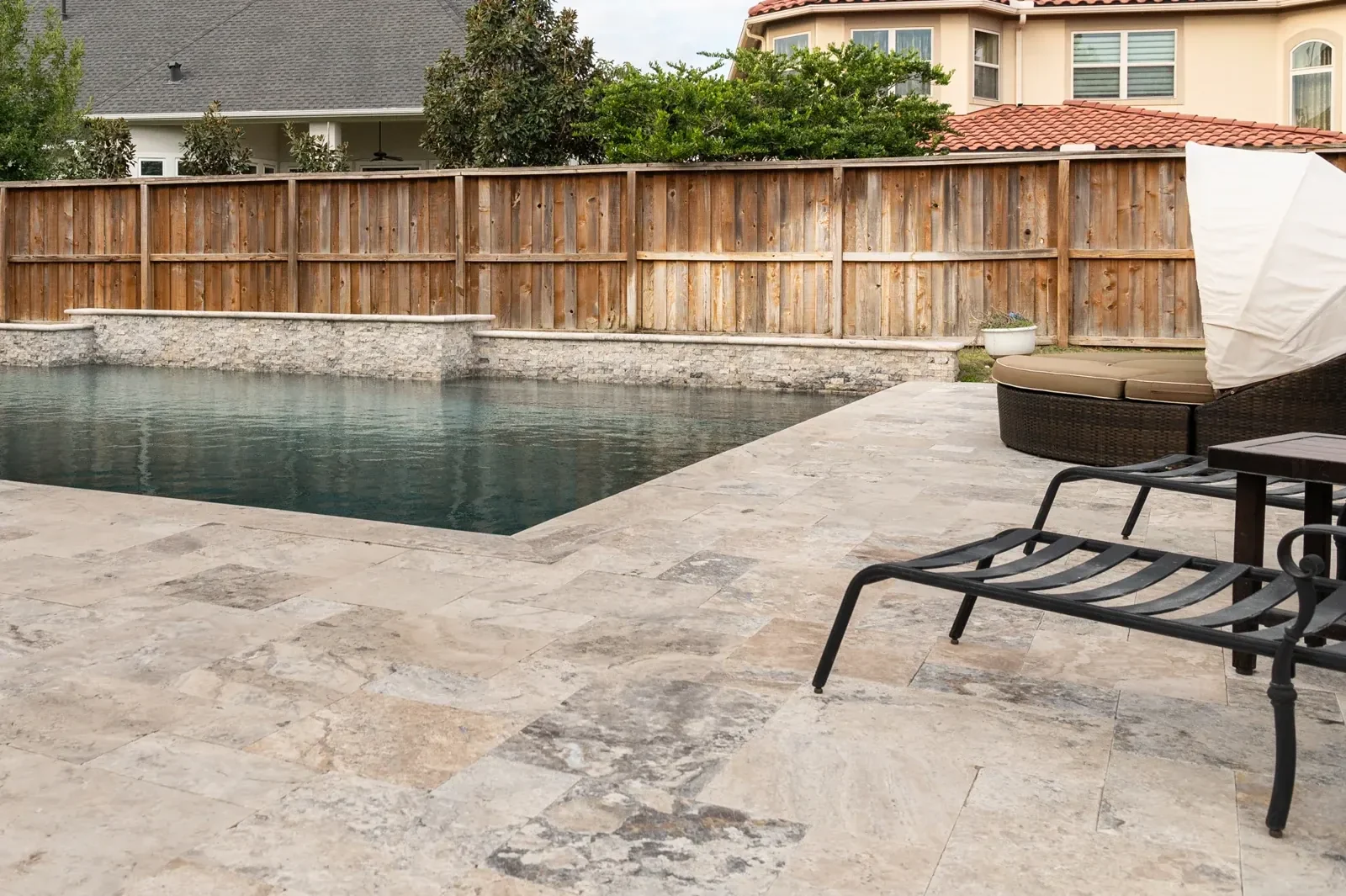
Is travertine comfortable around a pool?
Lighter travertine can stay cooler underfoot than many concrete and darker paver surfaces, but any paving can become hot in direct sun. Color, exposure and the particular material matter. Look at samples in the conditions where you will use them rather than assuming every stone will feel the same on a Houston afternoon.
A tumbled finish generally offers better wet grip than polished stone, but no finish makes a wet deck slip-proof. Choose a product suitable for exterior poolside use and discuss its finish, maintenance and sealing requirements. Keep the route between the water, seating and house in mind as well. A pool deck is a walking surface first, so comfort and suitability matter just as much as the pattern you see from the back door.
Which coping details work with travertine?
Coping should suit the pool edge and coordinate with the deck without creating an awkward transition. It is the detail at the water's edge, so its profile, finish and relationship to the surrounding paving deserve a separate look. Matching stone can create a consistent appearance; a coordinated contrasting edge can help define the pool.
The existing pool shape and edge conditions influence what will work. We review those conditions before recommending a coping approach, including how the deck meets it. Bring up any loose pieces, rough edges or changes in level that you have noticed. If coping is part of a broader update, our pool remodeling service can consider the tile, finish and deck together. Choosing these details in one plan helps the finished surfaces feel connected.
Can travertine go over existing concrete?
Travertine may be installed over suitable existing concrete, but the slab must be assessed before that approach is chosen. A new surface will not make unstable concrete or an unresolved drainage problem disappear. Cracks, movement, surface condition and available height all need a closer look at the property.
Where the existing slab is unsuitable or the layout is changing, a new base may be the better direction. We consider how the finished surface will meet doors, coping and adjoining patios before choosing the assembly. That matters because adding material changes the finished height. Our patio planning starts with the existing conditions and the intended use, not just a finish sample. The goal is a surface that works as part of the yard rather than a new layer over a problem.
Why do drainage and clay soil matter?
The deck needs a planned drainage route away from the pool, supported by base preparation suited to the site. Heavy Houston rain makes elevations and runoff part of the design conversation. Water should not be left to collect at the edge of the new work or carry unwanted runoff into the pool.
Clay soil can move as moisture conditions change, which is why we review the ground and base instead of treating paving as only a surface choice. The preparation, transitions and drainage need to work together. Tell us where you see standing water and whether nearby surfaces have moved. Those observations help us understand what needs attention. A pattern you like can usually be discussed after these practical questions, but a material choice alone cannot settle them.
How does travertine compare with pavers and porcelain?
Travertine offers natural variation, pavers offer a range of patterns and colors, and exterior porcelain offers another look with its own installation requirements. Compare the actual products, finishes and supporting work rather than deciding from material names alone. Poolside suitability depends on the selected surface, including how it behaves when wet.
Travertine is priced per square foot, based on the site and existing conditions. Our paver and travertine cost guide and project cost information explain how scope affects the proposal. Think about the nearby house finishes, the coping and how much natural color variation you enjoy. Ask to review the upkeep for the particular selection, too. A surface should fit the way you want to use and care for the backyard.
What sealing and upkeep should I expect?
Travertine needs cleaning and a sealing plan appropriate to the selected stone and its outdoor use. Houston humidity, rain and poolside conditions make regular attention worthwhile. Use care products suited to natural stone and follow the material and sealer guidance rather than choosing a cleaner only because it is convenient.
Discuss the appearance and wet-surface suitability of a sealer before it is applied. Sealing is not a substitute for drainage, cleaning or checking for loose or damaged areas. Natural variation is part of the material, but changes that affect the walking surface deserve attention. We can talk through care expectations during selections so the finish is a practical choice for your household, not just one that looks good on the day you choose it.
Could a stone overlay suit the existing deck?
A custom stone overlay is another option when the existing concrete is suitable for it. It offers a different approach to refreshing the surface, so it is worth considering before assuming the whole deck must be replaced. The condition of the concrete still determines whether it is a sensible choice.
Compare our custom stone overlay service with the deck options in the pool remodel or replacement guide. HPC plans outdoor living projects across Greater Houston, including Katy, Fulshear, Cypress, The Woodlands, Richmond and Conroe. At your consultation, we review the existing deck and explain the proposed scope. You see the design and know the cost before construction starts.
Frequently asked questions
Does every travertine sample look the same?
No. Travertine has natural variation, so review a selection that shows the range of color and texture. Consider it alongside the coping and nearby house finishes.
Can the deck be updated without changing the pool shape?
That may be possible when the existing pool and deck conditions support the plan. We review the edge, elevations and proposed work before recommending the scope.
Should I choose a deck color from an online photo?
Use photos to gather ideas, then review actual samples. Sun, shade and the surrounding materials can change how a color looks in your backyard.
Can I keep some of my existing patio?
We can assess whether retained surfaces will work with the new deck. The transition, height and drainage need to be considered together.
What should I discuss when I book?
Tell us what you want to improve about the existing deck and any drainage or movement you have noticed. Bring your material preferences so we can compare suitable options during the design conversation.
Your next chapter, outside
Ready to see what's possible in your backyard?
Prefer to talk first? Call (832) 245-8512