
Paver vs Travertine Patios in Houston: What They Cost
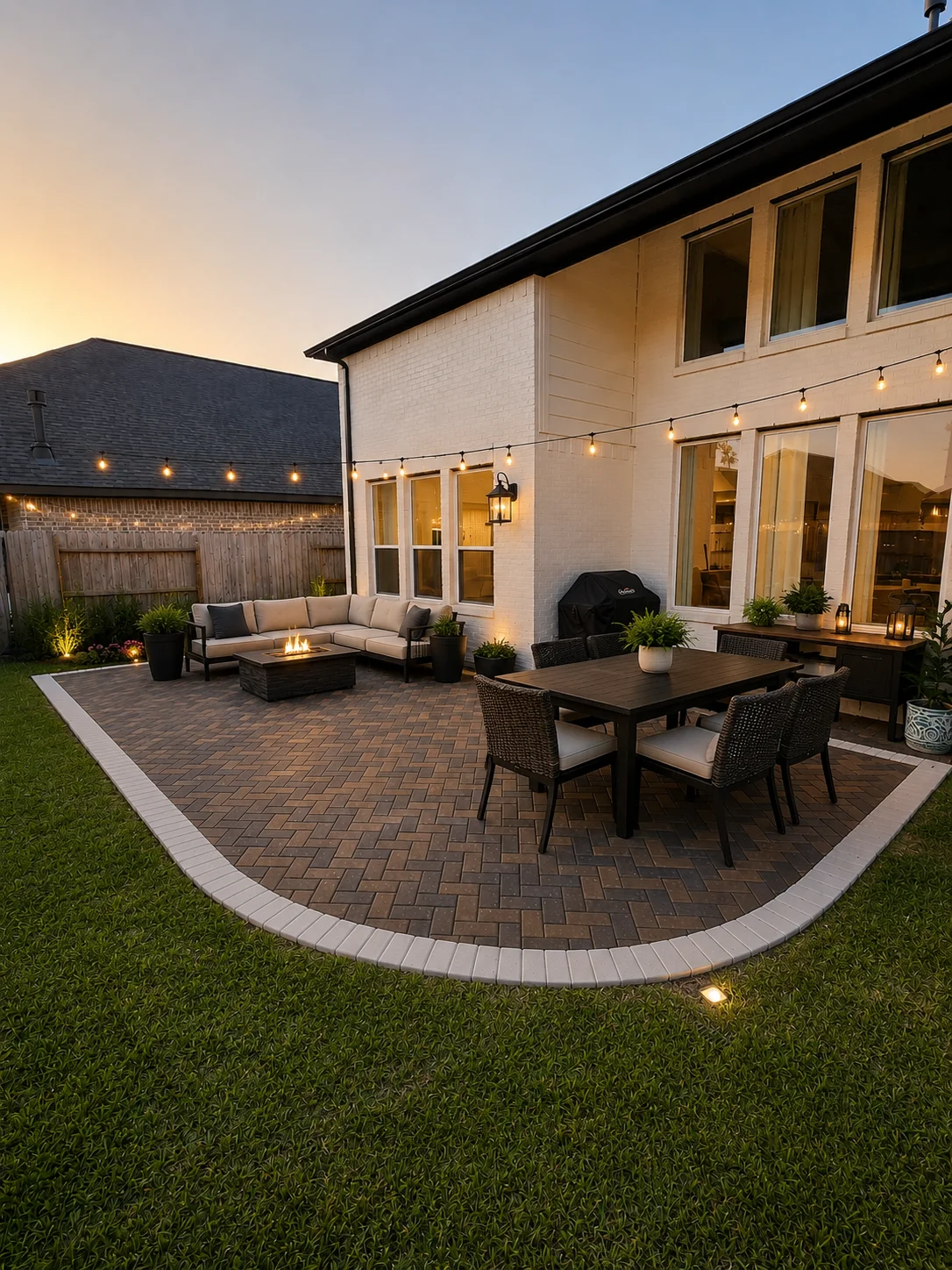
In Houston, smaller paver projects start around $5,000, and generous paver seating areas around $15,000. These are paver planning figures, not a published travertine minimum; travertine is priced per square foot based on the site and existing conditions.
What shapes the final price?
For smaller paver projects: area, paving product, removal, base preparation, access and pattern. For generous paver seating areas: seating layout, borders, cuts, transitions, drainage and supporting preparation.
How do pavers and travertine differ?
Concrete pavers offer a range of manufactured shapes, textures and patterns. Natural travertine has variation from stone to stone. We compare samples with the house, surrounding masonry and pool edge so the materials feel connected. The selected product also determines the appropriate installation method.
Why do preparation and pattern matter?
Long-term performance depends on preparation as well as the visible surface. We assess the existing ground, elevations and water flow, then plan the supporting base, bedding and edge restraint for the selected material. Curves, steps, pattern changes and detailed cuts require additional layout and labor.
Where can I review services and plan my project?
How do access and existing conditions affect patio cost?
Site access, removal and the condition of the ground affect the work needed before paving begins. An open area and a space reached through a restricted route can require different planning. Existing concrete, adjoining surfaces and the intended finished height also influence the installation approach.
We review these conditions with the paving selection rather than pricing the surface in isolation. Travertine is priced per square foot, based on the site and existing conditions. Our travertine pool deck guide covers material and drainage considerations around water. Bring up any areas that hold water or have moved so those concerns can be assessed before a new surface is selected.
Why should drainage be part of the proposal?
Drainage and supporting preparation belong in the proposed scope because the finished patio must work with the surrounding yard. Heavy Houston rain makes elevations and runoff important. The selected material does not remove the need to assess the base, edge conditions and transitions to retained surfaces.
Ask the contractor to explain the preparation and drainage approach, not just the visible pattern. Curves, borders and changes in direction can add layout work, so identify the details that matter most to you. The backyard budget examples show paving within larger outdoor living scopes. They are useful planning references, but your patio needs a proposal based on its own conditions.
What should I ask before signing a patio proposal?
Ask what removal, preparation, paving, borders and transitions are included, and which work is outside the quoted scope. Confirm allowances, options, tax and furniture rather than treating a picture as a complete specification. A clear written proposal helps you compare the actual work being offered.
HPC is fully insured, and we warranty our work. We handle HOA approvals and permits and confirm applicable requirements during design. Ask any contractor who prepares the submittal and who handles engineering when required. Approval timing varies by the property and reviewing authority, with no set duration. Those responsibilities should be understood before work begins, alongside the material and installation choices.
What helps turn patio ideas into a realistic budget?
Start with the way you will use the patio, then choose the size and layout that support it. A dining area, lounge seating and a route to the pool each need room. Share furniture dimensions if you already have pieces you want to keep, without assuming furniture is included in the construction proposal.
Bring a survey or plat if available, HOA guidance, inspiration photos and a comfortable budget range. We can discuss which pattern and finish details are priorities and which are flexible. Financing is available through the existing financing options. The design and proposal give you a clear scope before construction starts.
What else should I know?
What are the paver patio starting prices?
Smaller paver projects start around $5,000. A generous seating area typically runs around $15,000.
Are those starting prices also travertine prices?
No. The paver figures are planning references, not a published travertine minimum. Travertine is priced per square foot based on the site and existing conditions.
What changes the cost of a paver patio?
Area, paving product, removal, base preparation, access and pattern. Seating layout, borders, cuts, transitions, drainage and supporting preparation also shape the final price.
Do pavers and travertine use the same installation method?
No. The selected product determines the appropriate installation method. Concrete pavers, porcelain and natural stone are not treated as one interchangeable installation system.
What should I bring to the consultation?
Bring inspiration photos, a survey or plat if available, HOA guidance and a budget range. Point out drainage concerns and tell us how you plan to use the patio.
Plan your project scope
Explore our service page and project investment guide.
Talk through your budget to discuss the property, priorities, investment range and next steps.
Your next chapter, outside
Let’s make room for
the way you live.
Prefer to talk first? Call (832) 245-8512